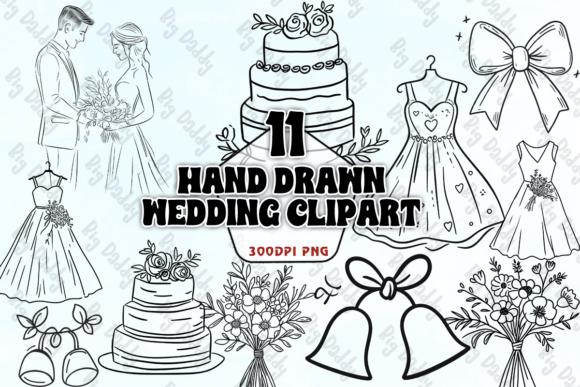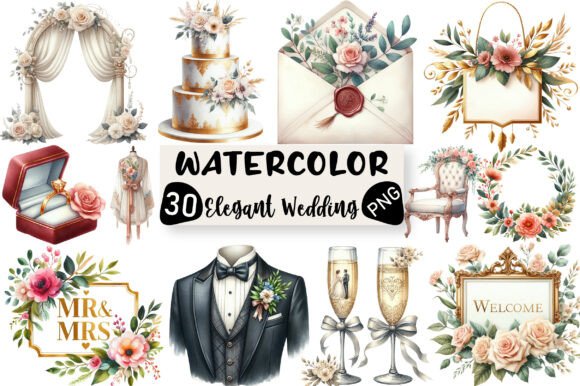
Hand Drawn Wedding Floral SVG Clipart for Elegant Designs
There is a certain charm to illustrations that feel human-made. In a world saturated with sleek, computer-generated graphics, the subtle imperfections of a hand-drawn line can evoke a sense of warmth and nostalgia that resonates deeply. This is especially true for romantic and celebratory themes, where a personal touch is not just preferred but expected. A collection of meticulously crafted illustrations, like the Hand Drawn Wedding Floral SVG Clipart bundle, offers a versatile toolkit for creators aiming to inject that timeless, elegant aesthetic into a wide array of projects. It’s about capturing the delicate beauty of a floral arrangement or the soft curl of a ribbon in a way that feels authentic and artful.
The Art of the Line: Visual Appeal and Versatility
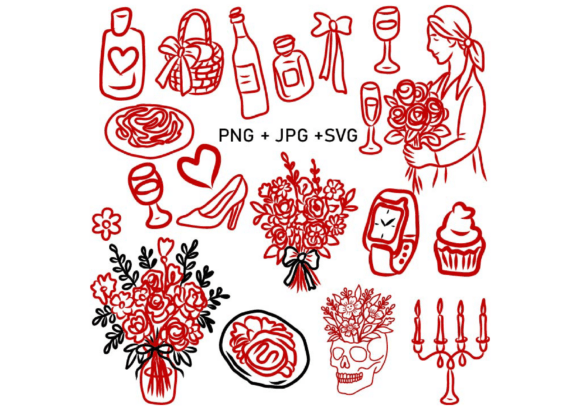
What sets this particular style of clipart apart is its clean, minimalist approach. The illustrations are rendered in black and white, focusing on the purity of the line work. This simplicity is a tremendous strength. A single, elegant rose drawn with a fine, confident stroke can be used as a standalone accent or combined with other elements to build complex, layered compositions. The assortment includes not just individual flowers like peonies, roses, and eucalyptus, but also cohesive bouquets, decorative ribbons, and other wedding-themed motifs. This allows for both spontaneous creativity and structured design work.
The true power of a high-quality SVG clipart bundle lies in its adaptability. Because the files are provided in multiple formats—SVG for scalable vectors, PNG with transparent backgrounds for easy layering, EPS for professional print workflows, and JPG for quick use—creators are never locked into a single application. A wedding planner can use a delicate floral frame for a client's seating chart, while a graphic designer might incorporate the same element into a sophisticated logo for a boutique florist. The assets are designed to move seamlessly between digital and physical realms, making them a practical cornerstone for any creative professional's library of design assets.
From Screen to Paper: Practical Applications Across Mediums
The utility of such a collection extends far beyond traditional wedding stationery. For entrepreneurs and small business owners, these illustrations offer a way to develop a cohesive and recognizable brand identity without the recurring cost of custom illustration. Consider a small-batch soap maker or a artisanal candle company. Incorporating a subtle floral line drawing into product packaging, a website header, or social media graphics creates an immediate visual association with quality, craftsmanship, and natural elegance. It tells a story before the customer even reads a word.
For those in the creative and marketing space, the applications are equally broad. Bloggers can use floral accents to break up text, highlight quotes, or design featured images that align with their site's aesthetic. Social media managers can create a consistent visual language for a client's Instagram feed or Pinterest boards, using the clipart to design story templates, post backgrounds, and highlight covers. The high-resolution, organized layers mean that elements can be easily resized, recolored, or isolated to fit any layout, ensuring visual consistency across all platforms. This consistency is key to building brand recognition and presenting a professional, polished image to your audience.
For crafters and hobbyists, the bundle opens up a world of DIY potential. With files optimized for cutting machines like Cricut and Silhouette, creating intricate paper flowers for card making, custom vinyl decals for wedding favors, or stencils for fabric projects becomes a straightforward process. The clean lines ensure a precise cut every time. Digital artists and illustrators working in Procreate can import the PNG files as stamps or reference layers, using them as a foundation for more complex, painterly pieces. This blend of digital precision and hand-drawn character is what makes the resource so uniquely valuable for modern typography and graphic design projects.
Integrating Illustrations into a Cohesive Visual Strategy
Using decorative elements effectively requires more than just placement; it demands a thoughtful approach to visual harmony. When incorporating these floral designs, think about their role in the overall composition. Are they the main focus, as on a wedding invitation's centerpiece, or are they supporting actors, adding texture to a background or framing a call-to-action button on a website? The minimalist style of this clipart makes it exceptionally well-suited for pairing with a wide range of typography. A bold, modern sans serif font can create a striking contrast, while a classic serif font can enhance the timeless, romantic feel. A flowing script font, used sparingly for headlines or monograms, can echo the organic movement of the floral lines.
This process of font pairing and element integration is fundamental to effective branding and marketing. The illustrations should complement, not compete with, your messaging. For example, a wedding photographer might use a soft floral border on their pricing guide, paired with a clean, readable body font, ensuring the beautiful imagery enhances the information without overwhelming it. The goal is to create a visual experience that feels intentional and effortless, guiding the viewer's eye and reinforcing the desired emotion or message. This careful curation of visual elements—from the primary typeface to the smallest decorative flourish—is what elevates a project from merely functional to truly memorable and engaging.
Choosing and Using Your Design Assets Wisely
When selecting any creative resource for commercial use, due diligence is crucial. Always review the licensing terms to ensure they cover your intended applications, whether for client work, merchandise, or digital products. The best resources, like this Hand Drawn Wedding Floral SVG Clipart bundle, are typically organized with clear, logical layers and come in universally compatible formats, saving you significant time in file preparation and troubleshooting.
Before committing to a large project, it's wise to test how the assets perform in your specific workflow. Does the SVG import cleanly into your cutting software? Do the PNGs maintain their crisp edges when scaled in your design program? How do the elements look when printed on your chosen paper stock or material? Taking the time to experiment with small tests ensures that your final product will meet professional standards. Ultimately, the most valuable design assets are those that not only look beautiful but also function seamlessly within your creative process, empowering you to produce work that is both visually stunning and technically sound. They become a trusted part of your toolkit, helping you communicate ideas with clarity, elegance, and a distinct personal touch.